
 By
By Introduction: Japan Breaks Speed Barriers with World’s Fastest Maglev Train
Japan, known for its cutting-edge innovation in rail transport, has once again made headlines with the development of the world’s fastest magnetic levitation (maglev) train prototype. Created by Central Japan Railway Company (JR Central), this futuristic train known as the L0 Series has achieved record-breaking speeds of 603 kilometers per hour (375 mph) on the Yamanashi Test Track. It reflects Japan’s commitment to redefining the boundaries of public transport and advancing magnetic levitation technology.
What is the L0 Series Maglev Train?
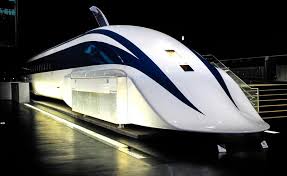
The L0 Series is Japan’s superconducting maglev (SCMaglev) train. Unlike traditional trains, it levitates above magnetic tracks using electrodynamic suspension (EDS) technology. This allows the train to avoid friction, enabling unmatched speed and smooth travel. The design includes a sleek aerodynamic body with an extended nose to reduce air resistance in tunnels and increase efficiency.
Unmatched Speed and Record-Breaking Performance
On April 21, 2015, Japan’s maglev set a world record by achieving a speed of 603 km/h. The train sustained this speed for over 10 seconds during testing. While commercial operations are planned at 500 km/h, this still significantly outpaces most conventional high-speed trains, such as France’s TGV or China’s Fuxing Hao.
Route and Commercial Plans: Chūō Shinkansen
The Chūō Shinkansen is the route planned for commercial use of the L0 maglev. Initially linking Shinagawa Station (Tokyo) to Nagoya, the project will later extend to Osaka. This maglev line will cut travel times drastically:
- Tokyo to Nagoya in 40 minutes
- Tokyo to Osaka in 67 minutes
Engineering Marvel: Inside the Maglev
- Levitation Height: 10 cm above the guideway
- Car Composition: 12 cars, capable of carrying up to 728 passengers
- Technology Providers: Mitsubishi Heavy Industries & Nippon Sharyo
- Energy Use: Efficient at high speeds, no friction losses
- Design: 15-meter long nose, aerodynamic shell, noise-reduction
Challenges Facing the Maglev Project
Despite its technological excellence, the maglev project has encountered some hurdles:
- Construction Delays: Due to objections from Shizuoka Prefecture over environmental concerns, particularly regarding river ecosystems.
- Underground Construction: Nearly 90% of the route will be tunneled, increasing cost and complexity.
- Financial Burden: The estimated cost is around ¥9 trillion (approx. $60 billion USD).
Public Testing and Passenger Experience
Japan has already begun public trial runs on short loops of the Yamanashi test line, offering passengers a taste of 500 km/h rides. These public trials are important for gathering feedback and refining safety protocols. Travelers have described the ride as extremely smooth and nearly silent, despite the breakneck speed.
Global Competition: China’s Challenge
While Japan leads in real-world testing and infrastructure, China has also unveiled its own maglev prototype, capable of reaching 600 km/h, developed by CRRC Corporation. However, Japan still holds the record for actual achieved speeds and testing in realistic conditions.
Export Potential and Global Impact
Japan plans to export its SCMaglev technology to countries interested in high-speed infrastructure. Talks have occurred with the United States regarding a maglev route between Washington D.C. and New York City, which could reduce travel time to just 1 hour.
Environmental and Economic Impact
Maglev trains offer environmental benefits:
- Zero contact = minimal wear and tear
- Electric propulsion = reduced emissions
- Efficient tunneling means reduced noise pollution in urban areas
The maglev train is not just a transportation system but a technological showcase of Japan’s innovation in engineering and commitment to eco-friendly infrastructure.
What’s Next for Japan’s Maglev Train?
- 2025–2030: Continued public trials, tech refinement, and station readiness
- 2034: Expected commercial operation between Tokyo and Nagoya
- 2045: Targeted expansion to Osaka
- Future Export Projects: Partnerships with U.S., Asia, and Europe under evaluation
Conclusion: A Revolution in Rail Travel
The development of the world’s fastest maglev train by Japan marks a major leap in transport innovation. From technical excellence to future-focused design, the L0 Series is poised to change the way people perceive high-speed rail. Once in operation, it promises to redefine urban connectivity, significantly reduce travel time, and set new standards in comfort, safety, and speed. Despite challenges, Japan’s dedication to this project demonstrates its position as a leader in next-gen transportation.
6 Comments